
What Trauma-Informed Therapy Actually Looks Like
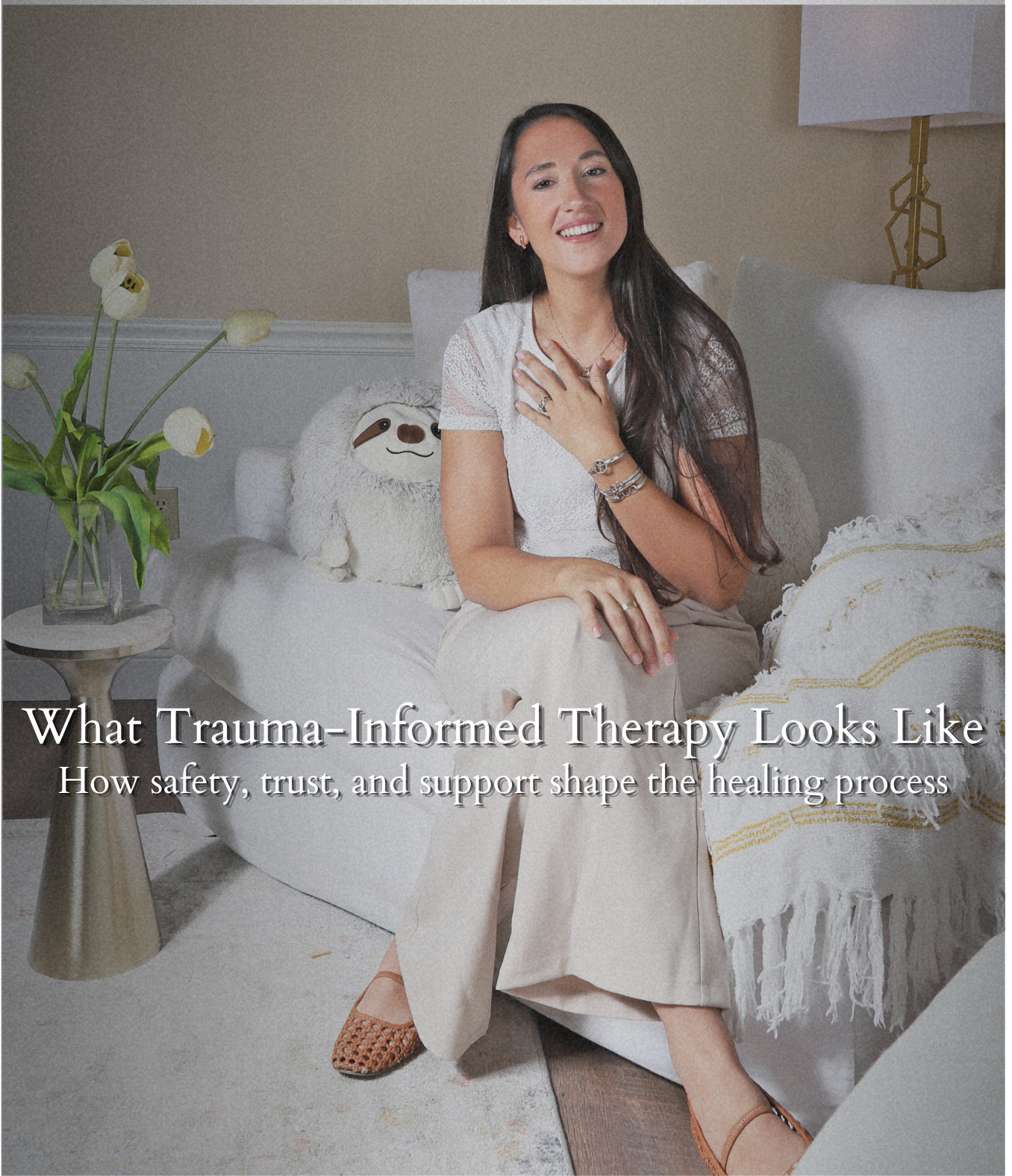
Emily Espinoza, MA, NLC-P, Registered Marriage & Family Therapist Intern seated in a calm counseling office with the title “What Trauma-Informed Therapy Looks Like” and a subtitle about safety, trust, and support in healing.
What Trauma-Informed Therapy Actually Looks Like
Trauma-informed therapy is a phrase many people have heard, but not everyone is sure what it actually means. Some people assume it only applies to extreme experiences. Others think it means therapy will focus only on painful memories from the past. In reality, trauma-informed therapy is not about forcing someone to relive difficult moments. It is about creating a safe, respectful, and supportive environment where healing can happen at a pace that feels manageable.
At its core, trauma-informed therapy recognizes that difficult life experiences can affect far more than emotions alone. Trauma can shape the nervous system, relationships, beliefs, sense of safety, stress responses, and the way a person moves through daily life. It can come from a single overwhelming event, but it can also develop through chronic stress, childhood instability, abuse, neglect, grief, medical experiences, relationship harm, or long periods of living in survival mode.
Understanding Trauma Through a Different Lens
A trauma-informed approach looks at symptoms with compassion and context. Rather than asking what is wrong with someone, it asks what they have been through and how they learned to cope.
What looks like anger may actually be protection.
What looks like avoidance may be overwhelm.
What looks like emotional shutdown may be a nervous system that learned to survive by disconnecting.
This shift matters. Many people come to therapy carrying shame about how they respond to stress, conflict, or emotional pain. Trauma-informed therapy helps people understand that many of their patterns developed for a reason. The goal is not to judge those responses, but to understand them and begin creating safer, healthier ways to cope.
What Trauma-Informed Therapy Feels Like
Trauma-informed therapy often feels different from what people expect. It is usually slower, more collaborative, and more grounded. It is not about pushing someone to talk before they are ready. It is about building trust, increasing emotional safety, and helping a person feel more connected to themselves in the present.
In practice, this often means therapy moves at a pace the person can tolerate. The therapist pays attention not only to what is being said, but also to signs of overwhelm, shutdown, or emotional activation. Sessions are guided with care so that therapy feels supportive rather than re-traumatizing.
A trauma-informed therapist also works collaboratively. Instead of assuming what should happen next, the therapist and client work together to identify goals, priorities, and steps forward. This can help restore a sense of agency, especially for people whose past experiences involved helplessness, fear, or loss of control.
Common Elements of Trauma-Informed Therapy
Trauma-informed therapy often includes psychoeducation, which means learning how trauma affects the brain, body, and nervous system. Understanding these responses can help reduce shame and make symptoms feel more understandable.
It may also include grounding skills, emotional regulation strategies, boundary work, and support with recognizing triggers. These tools can help a person feel more present, more stable, and better able to respond to distress without becoming overwhelmed.
When deeper processing happens, it is done with care and only when the person feels ready and supported enough for that step. Trauma-informed therapy does not assume that healing requires reliving every painful moment. Instead, it focuses on building safety, stability, and trust so that healing can happen in a way that feels sustainable.
Why Safety Matters So Much
Safety is one of the most important parts of trauma-informed care. This includes physical safety, but it also includes emotional safety. People need spaces where they do not feel judged, rushed, dismissed, or pressured to heal on someone else’s timeline.
For many individuals, simply being in a space where they feel respected, heard, and not pushed beyond their capacity can be deeply healing. When someone has spent a long time bracing for harm, criticism, or unpredictability, safety is not a small part of the work. It is the foundation.
Who Can Benefit From Trauma-Informed Therapy
Trauma-informed therapy can be helpful for people who often feel on edge, disconnected, overly responsible, emotionally reactive, numb, ashamed, or stuck in patterns they do not fully understand. It can also help people who have spent years minimizing their experiences or telling themselves that what happened was not serious enough to matter.
You do not have to prove that your pain was extreme in order to deserve support. If something has affected your ability to feel safe, connected, regulated, or fully yourself, it matters.
Trauma-informed care can be especially supportive for people living with anxiety, chronic stress, relationship difficulties, grief, substance use concerns, codependency, depression, or a history of difficult life experiences that continue to affect them in the present.
A Simple Regulation Practice to Try
One gentle grounding skill that many people find helpful is box breathing.
Breathe in for four seconds.
Hold for four seconds.
Breathe out for four seconds.
Hold again for four seconds.
Repeat this cycle for one minute.
This type of breathing can help slow the stress response, reduce physical reactivity, and bring attention back to the present moment. It is not a cure for trauma, but it can be a simple way to support regulation when you are feeling activated or overwhelmed.
What Healing Can Look Like
Healing in trauma-informed therapy does not always look dramatic. Sometimes it looks like learning to notice your body before you shut down. Sometimes it looks like setting a boundary without overwhelming guilt. Sometimes it looks like sleeping more deeply, feeling safer in relationships, or realizing you no longer have to brace for everything all the time.
Trauma-informed therapy is not about becoming a different person. It is about understanding what you have carried, responding to yourself with greater compassion, and building a steadier foundation for healing.
For many people, one of the most meaningful parts of this work is not simply being heard. It is finally feeling safe enough to exhale.
A Final Word
Trauma-informed therapy is not about forcing painful memories to the surface. It is about creating a therapeutic space where healing can happen with safety, trust, respect, and care.
If you have been feeling overwhelmed, disconnected, stuck in survival mode, or unsure why certain patterns keep repeating, therapy may offer a place to better understand what is happening and begin moving forward in a way that feels supportive and manageable.
When you are ready, Nova Counseling Services can help you explore what healing may look like for you.
Ready to talk? Call (772) 212-5327 or book online through Nova Counseling Services.