
Recovery Begins After Stopping
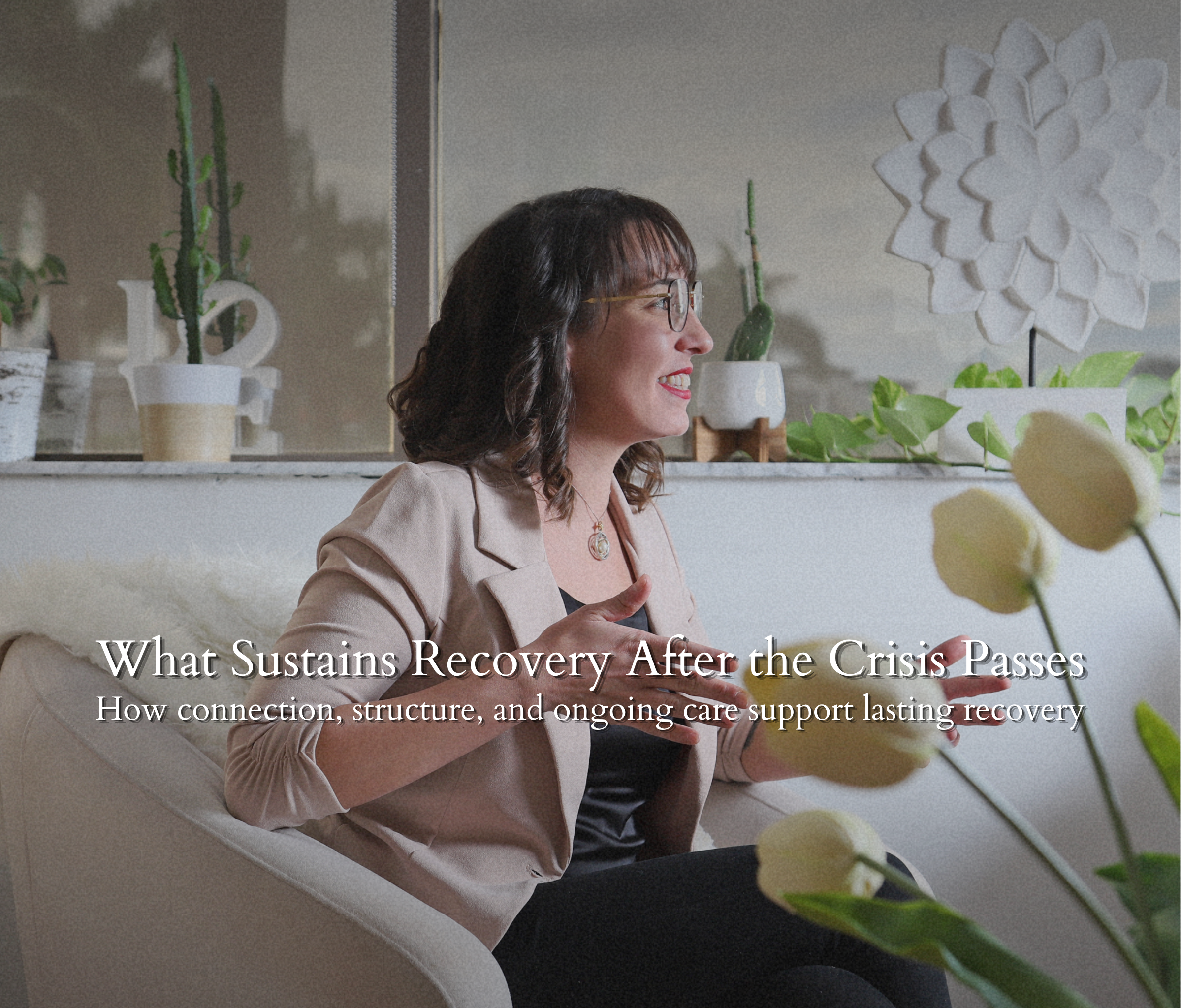
Rebecca Booth, Registered Clinical Social Worker Intern and CAC seated in a calm counseling office with text reading “What Sustains Recovery After the Crisis Passes” and a subtitle about connection, structure, and ongoing care supporting lasting recovery.
How connection, structure, and ongoing care support lasting recovery
Stopping a substance or stepping away from a harmful coping pattern is an important beginning, but it is not the full picture of recovery.
For many people, the hardest part comes after the immediate crisis has passed. Early recovery can bring emotional vulnerability, restlessness, cravings, family tension, uncertainty, and the challenge of learning how to cope without returning to what once provided relief. That is why recovery is not only about stopping. It is also about what helps you stay steady afterward.
At Nova Counseling Services, recovery work is approached with compassion, structure, and practical support. The goal is not perfection. The goal is to help you build a recovery foundation that feels realistic, sustainable, and grounded in your actual life.
If you are in Port St. Lucie or the surrounding area, this page can help you understand what supports recovery over time and how to begin building a plan that strengthens stability, connection, and follow-through.
Why Stopping Is Only the First Step
Stopping matters. It can interrupt a harmful pattern and create space for something different. But recovery is more than the absence of use or behavior. It is the ongoing process of rebuilding daily life in a way that supports emotional health, self-direction, and long-term stability.
Many people discover that once the substance or behavior is removed, other challenges rise to the surface. Stress may feel stronger. Emotions may feel harder to manage. Triggers may become more noticeable. Relationships may need repair. Old routines may no longer work.
This is not failure. It is often part of the process.
Recovery becomes more sustainable when people are not expected to rely on willpower alone. It is strengthened by structure, support, coping tools, and care that continues beyond the moment of stopping.
What Helps Support Recovery
A strong recovery plan often includes four core areas: stability, connection, skills, and ongoing care.
Stability
Recovery tends to feel stronger when daily life has some predictability. Stability may include safe housing, consistent sleep, regular meals, a manageable routine, and fewer chaotic environments. These things may seem simple, but they matter. When the body and mind are constantly overwhelmed, it becomes harder to make intentional choices.
Connection
Recovery is difficult to sustain in isolation. Support may come from a therapist, sponsor, peer group, family member, trusted friend, or recovery community. Even one steady person who checks in regularly can help reduce shame, increase accountability, and make the process feel less lonely.
Skills
Motivation matters, but recovery also requires tools. Helpful skills may include grounding, urge management, emotional regulation, relapse prevention planning, boundary setting, and strategies for handling stress without returning to old patterns.
Ongoing Care
Recovery often benefits from continued support rather than crisis-only intervention. Ongoing care might include individual therapy, family therapy, medication management when appropriate, peer support, or other recovery-oriented services that help keep progress moving forward.
A Simple Weekly Recovery Plan
One of the most practical things you can do in early recovery is create a basic plan for the week ahead. It does not need to be complicated. The purpose is to increase structure, awareness, and follow-through.
You can use this format:
Goal for this week: _____________________________
Top three triggers
Planned coping steps
Support contacts
Therapist: ___________________________
Peer, sponsor, or trusted support: ___________________________
Emergency support: ___________________________
Self-care targets
Sleep: ______ hours per night
Movement: ______ minutes per day
Social check-in: ______ times this week
This type of plan can help reduce impulsive decision-making and give you something concrete to return to when stress or urges increase.
What To Do When Urges Rise
Urges can feel intense, but they do not last forever. Having a simple response plan can make it easier to pause instead of reacting automatically.
When you notice an urge:
Pause and name what is happening.
Remind yourself that urges rise and fall.
Use a quick grounding or breathing practice.
Reach out to your support person, peer, or sponsor.
Step away from the high-risk environment if possible.
Use a pre-planned coping tool or distraction.
If needed, contact your clinician or another support resource.
The goal is not to shame yourself for having an urge. The goal is to slow the pattern down enough to make a safer next choice.
A One-Minute Regulation Practice
When stress rises, the nervous system can become activated quickly. In those moments, even simple tools can help bring the body back toward regulation.
Try box breathing:
Inhale for 4 seconds.
Hold for 4 seconds.
Exhale for 4 seconds.
Hold for 4 seconds.
Repeat for 4 cycles.
This practice will not solve everything, but it can help reduce physical reactivity and create enough space to think more clearly.
Why Family and Support Systems Matter
Addiction and behavioral health struggles rarely affect only one person. They often shape communication, trust, roles, routines, and emotional safety within the family or support system.
Even after someone stops using, the effects may still be present. Family members may feel fearful, guarded, resentful, confused, or unsure how to help. The person in recovery may feel shame, pressure, or frustration as everyone tries to adjust.
This is one reason family support can be so important. Recovery is often more sustainable when the system around the individual is also supported. Education, healthier communication, and clearer boundaries can help reduce conflict and create a stronger foundation for change.
When It May Be Time To Reach Out
You may benefit from additional support if:
You have stopped, but you feel emotionally unsteady or overwhelmed.
You are struggling with cravings, triggers, or relapse risk.
You feel isolated or do not have a support structure in place.
Relationships are strained and recovery is affecting the whole family.
You want a recovery plan that feels more practical and sustainable.
You do not need to wait until things fall apart again to get help. Support can be useful early, especially when you are trying to build something more stable than survival mode.
A Simple Action Plan for This Week
Create a one-page weekly recovery plan.
Choose one trusted person for a 15-minute check-in this week.
Practice box breathing once or twice a day, and during moments of urge or overwhelm.
Identify one high-risk situation and one coping response you will use instead.
Schedule an intake if you want more individualized support.
A Final Word
Recovery begins after stopping.
What helps sustain it is not pressure, shame, or trying to do everything alone. It is connection. Structure. Support. Repetition. Care that helps you keep moving forward when things feel hard.
At Nova Counseling Services, recovery support is practical, compassionate, and tailored to where you are right now. You do not need to have everything figured out to begin. You only need a willingness to take the next step.
Ready to talk? Call (772) 212-5327 or book online.