
Inner Child Work and Shadow Work: Understanding the parts of you that learned to survive

Pilar Gutierrez, LCSW, QA, seated in a warm counseling office with the title “Inner Child Work and Shadow Work” and a subtitle about understanding the parts of you that learned to survive.
Sometimes the patterns that feel most frustrating in adult life are not random. They may be connected to parts of you that learned to survive much earlier.
People often come to therapy feeling confused by cycles they can logically recognize but still struggle to change. They may notice people-pleasing, emotional shutdown, self-sabotage, harsh self-criticism, fear of conflict, chronic shame, difficulty trusting others, or intense reactions that seem bigger than the moment itself. On the outside, life may appear functional. On the inside, it can feel exhausting to keep carrying reactions, wounds, and needs that were never fully understood or supported.
Jungian-informed trauma work offers one way of understanding these patterns. Rather than focusing only on symptoms, it helps explore the conscious and unconscious parts of the self that were shaped by early experiences, unmet needs, and survival strategies. Two powerful areas of this work are Inner Child Work and Shadow Work.
This process is not about becoming someone different. It is about understanding the parts of you that learned to survive, responding to them with greater compassion, and creating more choice in the present.
What Jungian-Informed Trauma Work Means
Jungian-informed therapy draws from the idea that human beings are shaped not only by conscious thoughts and behaviors, but also by deeper emotional patterns, protective adaptations, and parts of the self that may exist outside of everyday awareness.
When trauma or chronic emotional stress is involved, some parts of the self may become overdeveloped in order to stay safe, while others may be hidden, silenced, or pushed away. Therapy can help bring these patterns into awareness in a way that feels grounded and manageable.
In trauma-focused work, this does not mean interpreting everything symbolically or digging into the unconscious without structure. It means paying attention to the deeper layers of experience that often influence relationships, emotional regulation, identity, and coping. The goal is not to pathologize these patterns. The goal is to understand them.
What Is Inner Child Work
Inner Child Work helps you reconnect with the younger parts of yourself that learned to adapt to early environments through hiding, pleasing, numbing, staying quiet, becoming overly responsible, or shutting down emotionally.
Many adults carry an inner child that still holds fear, grief, anger, loneliness, or unmet needs. When that part of the self remains unheard, it often shows up in adult life through emotional triggers, self-sabotage, shame, difficulty with boundaries, relationship conflict, or a persistent sense of not being enough.
Inner Child Work is not about becoming childish or living in the past. It is about recognizing that some emotional responses were formed at a time when you had fewer choices, less power, and less support. In therapy, this work helps you begin relating to those younger parts with safety, compassion, and steadiness rather than judgment or avoidance.
For many people, this process strengthens self-worth, emotional regulation, boundaries, and the ability to experience joy, rest, and connection with greater ease.
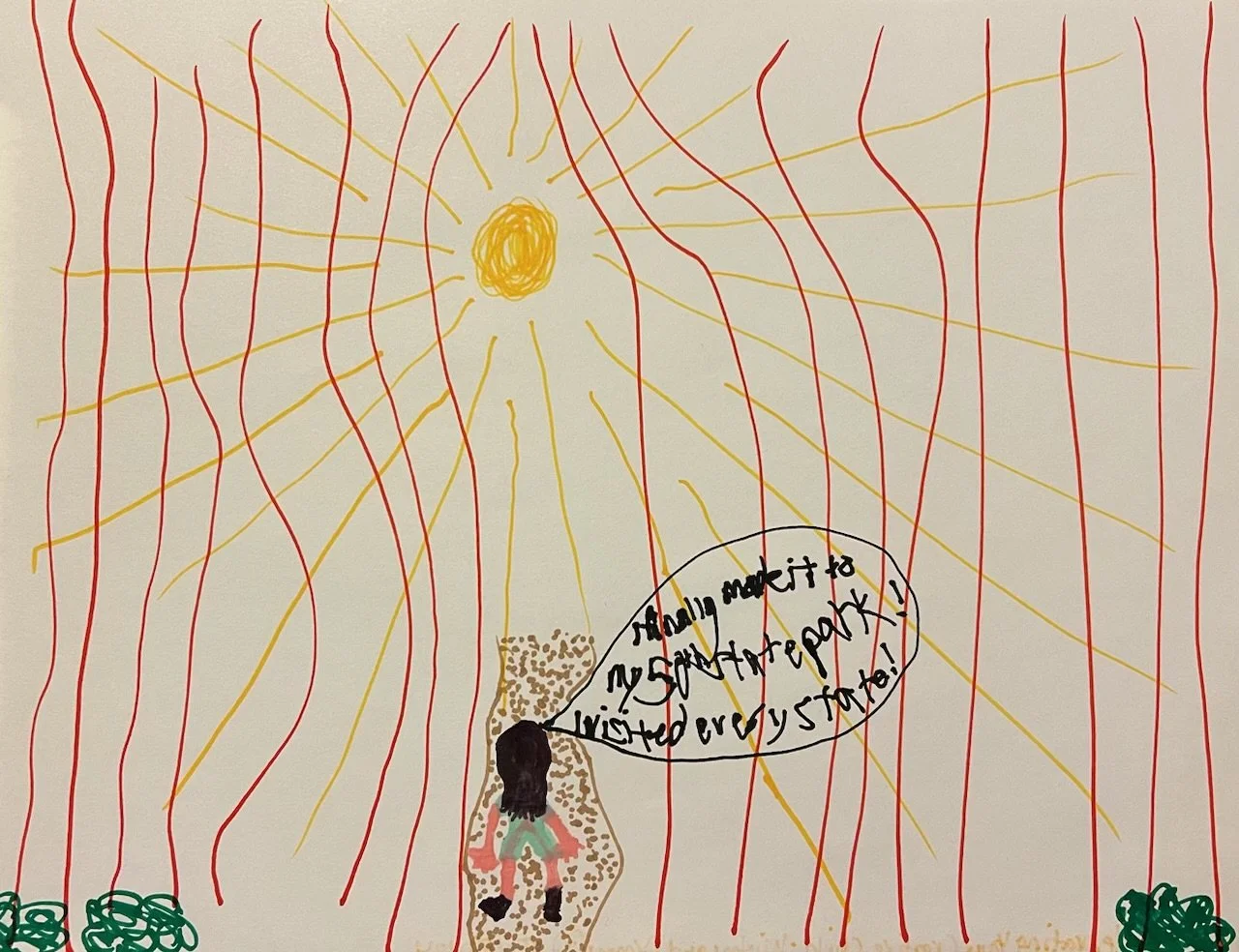
What My Inner Child Longed For
“Naming the dreams, freedom, and hope I carried". Inner Child artwork completed by a former client
What Is Shadow Work
Shadow Work focuses on the parts of yourself you were conditioned to suppress, hide, or disown because they did not feel safe, acceptable, or welcome in earlier relationships or environments.
These hidden parts may include anger, fear, envy, sensitivity, need, desire, sadness, or even healthy qualities like confidence, creativity, assertiveness, and authenticity. When these parts remain unintegrated, they do not disappear. They often continue to operate outside of awareness and may show up as emotional explosions, resentment, avoidance, compulsive patterns, internal conflict, or reactions that feel confusing and disproportionate.
Shadow Work helps bring these disowned parts into awareness with curiosity rather than shame. Instead of asking why you are reacting this way, therapy begins to explore what part of you learned that it was unsafe to feel, express, or need certain things.
This work can be deeply empowering. It helps people understand why these patterns developed, what they were protecting, and how to reconnect with these parts in a way that feels more grounded, honest, and whole.
How Unresolved Trauma Can Show Up
Unresolved trauma does not always look dramatic from the outside. Many people appear high-functioning while internally feeling overwhelmed, disconnected, or stuck in survival mode.
Trauma-related patterns may show up as:
Difficulty trusting yourself or others
Feeling emotionally numb or disconnected
Overthinking, hypervigilance, or constant on-edge energy
Fear of abandonment, rejection, or conflict
A harsh inner critic or shame-based self-talk
People-pleasing or over-functioning in relationships
Repeating patterns you intellectually understand but still cannot seem to change
Burnout, fatigue, or chronic emotional exhaustion
Panic symptoms, intrusive memories, or emotional flashbacks
Self-sabotage, emotional reactivity, or collapse after periods of stress
These patterns are not signs of weakness. They are often signs that your nervous system learned to organize around protection, even when that protection no longer serves you in the present.
How This Work Helps
Inner Child Work and Shadow Work can help people better understand the deeper emotional roots of their current struggles. Rather than focusing only on surface-level behavior, this approach helps build insight into why certain patterns developed and what they may still be trying to protect.
This work may help you:
Build a more compassionate relationship with yourself
Strengthen emotional regulation and reduce shame-based reactions
Understand triggers with greater clarity
Develop healthier boundaries
Reduce people-pleasing, avoidance, or self-sabotage
Improve relationship patterns
Reconnect with authenticity, joy, and self-trust
Feel more integrated rather than fragmented or at war with yourself
Trauma therapy is not about forcing the past to the center of every session. It is about helping your nervous system stop responding as if the past is still happening now.
What This Process Feels Like in Therapy
This process is real work. It can bring up emotion. It can also bring relief.
Jungian-informed trauma therapy often feels deeper than traditional insight-only talk therapy, but it should still feel grounded, collaborative, and emotionally safe. You are not pushed faster than your system can tolerate. Therapy moves at a pace that helps build both awareness and stability.
Sessions may include reflection, pattern recognition, parts work, emotional processing, nervous system support, and practical coping strategies. The goal is not only to understand yourself intellectually, but to help your mind and body experience something different over time.
For people who have tried therapy before and felt like they understood everything but still could not shift the pattern, this approach can offer another layer of healing. Insight matters, but insight alone is not always enough. Many people also need support in working with the emotional and protective parts of themselves that have remained unaddressed.
A Gentle Reflection Practice
If you want a simple way to begin reflecting, try asking yourself:
What part of me shows up most strongly when I feel rejected, overwhelmed, criticized, or unseen
What does that part seem afraid of
What might that part need from me today that it did not receive before
You do not need to force an answer. The purpose is simply to begin noticing your inner experience with more curiosity and less judgment.
If emotions begin to rise, pause and return to the present by grounding through your senses. Notice your feet on the floor, take a few slower breaths, and remind yourself that you are here, now, and safe enough to slow down.
A Final Word
Healing is not only about changing behavior. Sometimes it is about understanding the parts of you that learned to survive before you had the resources, support, or language to do anything differently.
Inner Child Work and Shadow Work can help you make sense of patterns that have felt confusing, painful, or exhausting for a long time. With the right support, these parts do not have to stay hidden, shamed, or in conflict. They can begin to feel seen, understood, and integrated in a way that supports greater stability, authenticity, and self-compassion.
You do not have to have everything figured out before starting this work. You only need a willingness to begin listening differently to yourself.
If this kind of deeper trauma-focused work feels relevant to what you have been carrying, Pilar offers support that is grounded, compassionate, and paced with care.
Ready to talk? Call (772) 212-5327 or book online through Nova Counseling Services.