
How to Know When Stress Has Become Something More
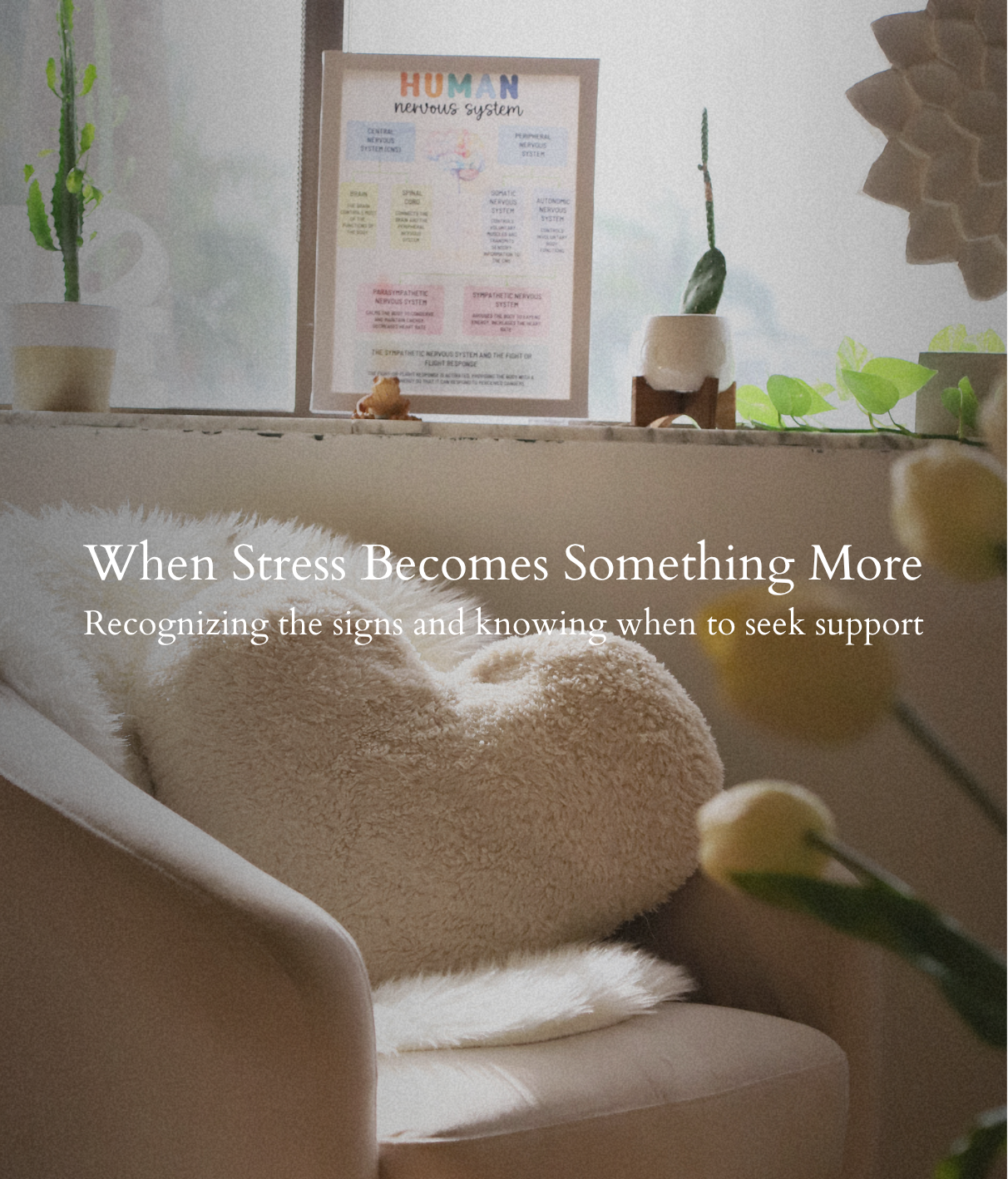
Warm therapy office image with a chair, heart-shaped pillow, and window display, featuring the title “When Stress Becomes Something More” and a subtitle about recognizing signs and seeking support.
Stress is a normal part of life. Most people move through busy seasons, difficult transitions, and emotionally demanding periods with stress that rises and falls. Often, stress eases once life becomes more manageable or the immediate challenge passes.
Sometimes, however, stress does not settle.
Instead, it lingers. It builds. It begins to affect sleep, focus, mood, relationships, physical health, and the ability to feel present in everyday life. When that happens, it may be a sign that what you are experiencing is no longer just temporary stress. It may be anxiety, burnout, emotional overwhelm, unresolved trauma, or another deeper struggle that deserves attention and support.
Recognizing that shift is important. You do not have to wait until everything falls apart to reach out for help.
Signs Stress Has Become Something More
A mind that will not slow down
You may replay conversations, anticipate problems, overthink decisions, or feel as though you are always bracing for the next thing. Even during quiet moments, your body may remain tense and your thoughts may still feel loud.
Physical symptoms
Emotional strain often shows up physically as headaches, fatigue, digestive issues, jaw tension, a racing heart, restlessness, or trouble falling and staying asleep. These symptoms are common and meaningful signs that your nervous system is under stress.
Emotional exhaustion
Small tasks may feel heavier than they used to. You may notice that you are more irritable, less patient, withdrawn, tearful, or emotionally flat. Some people describe functioning on autopilot while carrying a low level sense of dread in the background.
Shifts in coping patterns
When stress becomes chronic, people often reach for quick relief rather than true restoration. That can look like isolating, overworking, doomscrolling, emotional eating, avoiding responsibilities, shutting down, or using substances. These responses are often survival strategies, not personal failures.
What May Be Happening Beneath the Surface
When stress does not ease, there is often something deeper underneath.
Anxiety: Ongoing worry, hypervigilance, and difficulty relaxing.
Burnout: Emotional depletion, mental fog, reduced motivation, and detachment.
Depression or grief: Persistent sadness, loss of interest, hopelessness, or withdrawal.
Unresolved trauma: Past experiences that continue to activate the nervous system, leading to triggers, tension, or emotional shutdown.
Accumulated overwhelm: Many small, unprocessed stressors that build over time until the system can no longer recover on its own.
You do not need to identify the exact cause before seeking support. What matters most is how your symptoms are affecting your daily life.
How Therapy Can Help
Therapy provides space to slow down and better understand what is happening beneath the surface. When stress becomes chronic, people are often so focused on getting through the day that they do not have the time or perspective to notice patterns clearly. Therapy can help create that perspective.
It can help you identify emotional and situational contributors to stress, notice how stress is showing up in your body and relationships, and develop healthier coping strategies that restore energy rather than only providing temporary relief. Many people also benefit from learning nervous system regulation techniques, such as paced breathing, grounding exercises, or simple movement practices, that reduce physical reactivity and help them feel more present.
Therapy can also help you reconnect with yourself after long periods of living in survival mode. Seeking help is not a sign of failure. It is a way to receive support when what you are carrying has become too heavy to manage alone.
When to Reach Out
Consider reaching out if your symptoms have lasted for weeks or months and are affecting work, relationships, parenting, daily routines, or your sense of self. It may also be time to seek support if physical symptoms such as sleep disruption, headaches, digestive issues, fatigue, or tension do not improve with rest or basic self-care.
Support may be especially important if you are relying on coping strategies that feel isolating or harmful, or if you feel emotionally numb, constantly overwhelmed, or as though you are merely surviving rather than living.
You do not need to wait until life feels unmanageable. Early support can make a meaningful difference and may help prevent deeper exhaustion over time.
A Final Word
Stress is part of being human, but chronic overwhelm is not something you have to carry alone. If stress has started to feel more like anxiety, burnout, emotional exhaustion, or disconnection, there may be more going on beneath the surface than you realize. Paying attention to those signs is not weakness. It is awareness.
Healing often begins with understanding what your mind and body have been trying to tell you. When you are ready, Nova Counseling Services can help you explore what is happening and find practical, compassionate ways forward.
Ready to talk? Call (772) 212-5327 or book online through Nova Counseling Services.