
How Early Bonds Shape the Way We Trust, Love, and Feel Safe
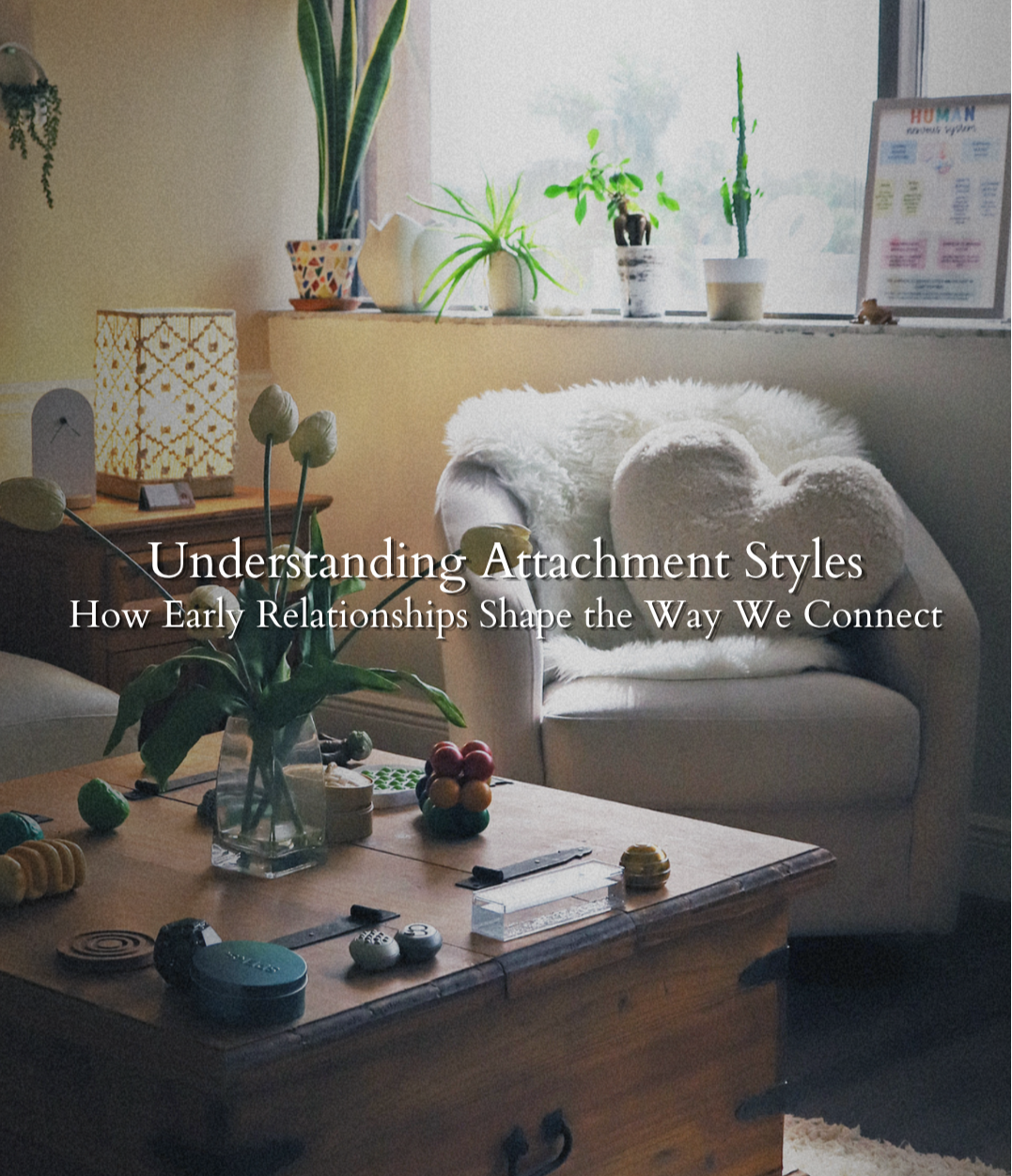
A warm, softly lit therapy office with a cozy chair, heart-shaped pillow, plants, and calming decor, representing emotional safety, connection, and healing in relationships.
The way we relate to other people does not begin in adulthood. It begins early, in our first experiences of comfort, safety, responsiveness, and emotional connection.
Attachment theory helps explain how our earliest relationships influence the patterns we carry into adult life. These early experiences can shape how we trust others, express needs, respond to conflict, and experience closeness. They can also influence how safe or vulnerable relationships feel.
Attachment styles are not diagnoses, flaws, or fixed labels. They are adaptive patterns that often develop in response to our earliest environments. What once helped a child stay connected or protected may later show up in adult relationships in ways that feel confusing, painful, or repetitive.
The encouraging news is that attachment patterns can be understood, explored, and changed.
What Is Attachment?
Attachment refers to the emotional bond we form with important caregivers early in life. When caregivers are generally responsive, emotionally available, and consistent, children tend to develop a sense that relationships are safe and that their needs matter.
Over time, these early experiences shape what psychologists often call internal working models. These are the deeply held beliefs we carry about ourselves, other people, and connection.
A person with more secure early experiences may develop beliefs such as, “I am worthy of care” or “Other people can be trusted.” Someone who grew up in a less consistent or less emotionally safe environment may begin to internalize messages such as, “My needs are too much,” “People may leave,” or “Closeness is not safe.”
These beliefs often operate outside of awareness, yet they can have a powerful effect on adult relationships.
Attachment Lives in the Body, Too
Attachment is not only expressed through thoughts and emotions. It also shows up in the body.
From infancy on, human beings communicate safety and distress through posture, movement, facial expression, eye contact, tone of voice, and physical closeness. Because of this, attachment patterns often become embodied over time.
For some people, connection feels steady and grounding. For others, closeness can bring tension, hypervigilance, or a strong urge to pull away. Some people long for reassurance while also fearing rejection. Others may appear independent on the outside while feeling emotionally disconnected or overwhelmed underneath.
These responses are not random. They often reflect old protective strategies that once made sense.
The Four Main Adult Attachment Styles
Secure Attachment
People with a more secure attachment style tend to feel relatively comfortable with both closeness and independence. They are often able to communicate openly, ask for support, repair conflict, and stay connected without feeling consumed by the relationship.
Secure attachment does not mean a person never struggles. It simply means relationships generally feel safe enough to allow honesty, mutual care, and emotional flexibility.
Anxious Attachment
Anxious attachment often develops when caregiving is inconsistent. A caregiver may have been available at times and emotionally unavailable or unpredictable at others.
As adults, people with anxious attachment may fear abandonment, seek reassurance, feel highly sensitive to shifts in tone or distance, or experience strong emotional reactions in relationships. Underneath these reactions is often a deep longing for closeness paired with uncertainty about whether it will last.
Avoidant Attachment
Avoidant attachment often develops when vulnerability is not welcomed or consistently met with comfort. A child may learn that expressing needs does not bring connection or that depending on others feels disappointing.
As adults, people with avoidant attachment may value independence very strongly, feel uncomfortable with too much emotional closeness, withdraw during conflict, or minimize their own needs. This is often less about not caring and more about having learned that self-reliance feels safer than vulnerability.
Disorganized or Fearful-Avoidant Attachment
Disorganized attachment can develop in environments that feel frightening, chaotic, or deeply inconsistent. In these situations, the person a child depends on for safety may also feel unpredictable or unsafe.
As adults, this can look like wanting closeness but feeling overwhelmed by it, moving toward connection and then pulling away, struggling with emotional regulation during relational stress, or feeling confused about what a safe relationship even looks like.
This pattern can be especially painful because the need for connection is strong, but closeness may also activate fear.
Why Relationships Can Feel So Intense
Adult attachment relationships often serve important emotional functions. In healthy connection, another person can become a source of comfort during distress and a secure base from which we move through life.
That helps explain why conflict, distance, inconsistency, or rejection can feel so activating. These moments often touch much older emotional systems. Sometimes a current relationship is not only about the present. It is also stirring earlier experiences of fear, loss, unpredictability, or unmet needs.
When this happens, people often judge themselves harshly instead of recognizing that an old attachment wound may have been triggered.
Attachment Patterns Can Be Passed Down
Attachment patterns often echo across generations. Caregivers who did not experience consistency, emotional safety, or attunement themselves may unintentionally pass along those same patterns.
This is not about blame. It is about understanding how relational patterns are learned and how they can be interrupted.
With awareness, support, and healing, new patterns can emerge.
Can Attachment Style Change?
Yes.
Attachment is not fixed. Human beings remain capable of growth throughout life. With insight and supportive experiences, people can begin to notice their patterns, understand where they came from, and respond differently.
Therapy can be especially helpful in this process. A safe and consistent therapeutic relationship can create space to explore early experiences, build emotional awareness, strengthen regulation skills, and practice new ways of relating.
Over time, many people become more secure, more self-aware, and more able to experience closeness without losing themselves.
A More Compassionate Way to Understand Yourself
Whatever your attachment style, it likely began as an adaptation. It was your nervous system’s way of helping you stay connected, protected, or emotionally safe in the environment you had.
That means your patterns are not evidence that something is wrong with you. They are signs that your system learned to respond in a particular way for understandable reasons.
Understanding attachment can reduce shame. It can help make sense of relationship struggles that once felt confusing. Most importantly, it can open the door to healing.
Growth does not require perfection. It begins with awareness, compassion, and new experiences of safety in connection.
If this resonates with you, therapy can offer a safe space to explore your attachment patterns, better understand your relationship experiences, and begin building more secure ways of connecting.