
When Behavior Is a Child’s Language: How Therapy Helps Children Express Big Feelings
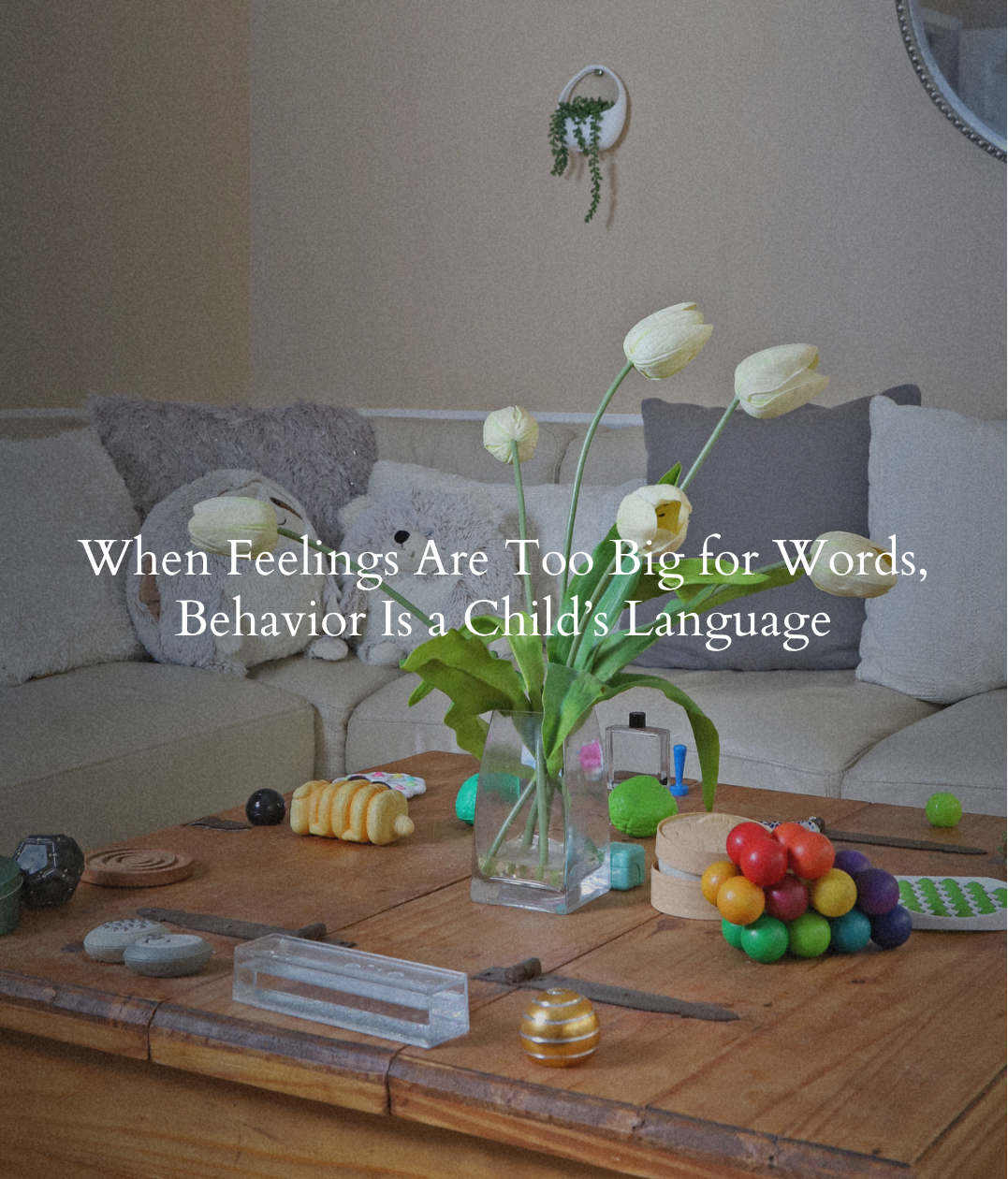
Child therapy room with toys and calming decor, illustrating how children may express big feelings through behavior when they do not yet have words.
Children do not always have the words to explain what they feel.
Sometimes sadness comes out as irritability. Anxiety may look like clinginess, stomachaches, avoidance, or sudden tears. Anger may show up as defiance, shutdown, yelling, or refusing to talk. A child who is overwhelmed may not say, “I feel unsafe,” or “I do not know how to handle this feeling.” Instead, they may act out, withdraw, become overly quiet, seek constant reassurance, or struggle with changes in routine.
For many children, behavior becomes the language they use when words are not available yet.
This is one reason therapy can be so helpful. Child therapy is not just about getting a child to “talk about their feelings.” It is about creating a safe, supportive space where a child can begin to understand what they are feeling, express those emotions in healthy ways, and learn that big feelings do not have to be scary, shameful, or handled alone.
Children Need Safety Before Expression
Before children can open up emotionally, they need to feel safe.
Emotional safety means a child feels accepted, not judged. It means they can express sadness without being told to stop crying. They can express anger without being labeled “bad.” They can share a fear without being dismissed as dramatic or too sensitive. They can be confused, overwhelmed, silly, quiet, guarded, or unsure, and still be met with patience.
Many children come into therapy unsure of what to expect. Some may worry they are in trouble. Some may think therapy means something is wrong with them. Others may be used to adults asking questions, correcting behavior, or rushing them to explain themselves before they are ready.
A child-centered therapy space works differently.
The goal is not to force a child to talk. The goal is to help them feel safe enough that expression can begin naturally.
Play Is a Child’s Language
Adults often process emotions through conversation. Children often process emotions through play.
Play gives children a way to communicate experiences, worries, fears, and needs without having to explain everything directly. A child may use toys, art, stories, games, sand trays, movement, or pretend play to show what they are feeling internally. Through play, children can explore emotions at a distance that feels manageable.
A stuffed animal may become the character who is scared. A drawing may show what a child cannot say out loud. A game may reveal how a child handles frustration, control, disappointment, or connection. A quiet activity may help a child feel grounded enough to begin sharing.
This does not mean every toy or activity has a hidden meaning. Sometimes play is simply play. But in therapy, play can become a bridge. It allows the therapist to meet the child in a developmentally appropriate way, build trust, and gently support emotional expression.
For a child, being allowed to play in a calm and accepting space can communicate something powerful: “You are safe here. You do not have to perform. You can be yourself.”
Feelings Become Less Scary When They Have Names
Children are not born knowing how to identify and manage emotions. They learn through relationships, modeling, repetition, and support.
A child may feel angry, but underneath the anger there may be embarrassment, fear, sadness, disappointment, or feeling left out. A child may say they are “fine,” but their body may be tense, their voice may be quiet, and their behavior may show that something feels heavy.
Therapy helps children begin to connect body signals, thoughts, behaviors, and emotions. A therapist might help a child notice that their stomach hurts when they are worried, their hands clench when they are mad, or they want to hide when they feel embarrassed.
Over time, children can learn language such as, “I feel nervous,” “I need space,” “I am frustrated,” “I feel left out,” or “I do not know what I feel yet.”
That last phrase matters too.
Children do not need to have perfect emotional language. They simply need support in learning that feelings can be noticed, named, and understood.
When feelings have names, they often become less overwhelming.
Therapy Teaches That All Feelings Are Allowed
One of the most important messages children can receive is that all feelings are allowed, even when all behaviors are not.
A child is allowed to feel angry, but they may need help learning not to hit, throw, or hurt others. A child is allowed to feel sad, even if adults wish they could make the sadness go away quickly. A child is allowed to feel scared, even when the fear does not make sense to someone else. A child is allowed to feel jealous, disappointed, confused, embarrassed, excited, or overwhelmed.
Therapy helps separate the feeling from the behavior.
Instead of “You are bad for feeling this,” the message becomes, “This feeling makes sense, and we can find a safer way to express it.”
That distinction can be deeply healing for children. When children feel shamed for their emotions, they may learn to hide them. When they feel supported in understanding their emotions, they can begin to build emotional regulation.
Emotional Regulation Is Learned Through Connection
Children do not learn regulation by being told to calm down. They learn regulation through repeated experiences of being supported while they are upset.
A calm adult presence can help a child’s nervous system begin to settle. This is called co-regulation. Before children can consistently regulate themselves, they often need safe adults to help them practice.
In therapy, this may look like slowing down, breathing together, using grounding tools, drawing feelings, taking a sensory break, practicing coping skills, or simply sitting with an emotion without rushing it away.
A therapist may help a child learn that big feelings rise, peak, and pass. They may practice ways to calm the body, express needs, tolerate frustration, or recover after conflict. These skills are not learned all at once. They are built through repetition and safety.
For children who have experienced stress, trauma, grief, family changes, bullying, anxiety, or emotional overwhelm, regulation may take time. Their nervous system may be used to staying alert. Therapy can help the child slowly learn that they do not have to stay in survival mode all the time.
Some Children Express Feelings Through Silence
Not every child comes into therapy ready to talk.
Some children are quiet. Some avoid eye contact. Some answer with “I don’t know.” Some change the subject, become silly, or focus only on toys and games. This does not mean therapy is not working. It may mean the child is still assessing whether the space feels safe.
Silence can be communication too.
A child who has been criticized, dismissed, pressured, or misunderstood may need time before they trust that their feelings will be handled gently. Therapy gives children space to move at their own pace. The therapist’s consistency, warmth, and patience help build safety over time.
For some children, emotional expression begins with small steps. Choosing a toy. Drawing a picture. Naming one feeling. Sharing one worry. Asking to play the same game each week. Sitting closer. Laughing. Making eye contact. Saying, “I don’t want to talk about that today.”
These moments may seem small, but they can represent growing trust.
Therapy Can Help Parents Understand the Message Beneath the Behavior
Child therapy is often most effective when caregivers are part of the process.
Parents and caregivers may feel confused, frustrated, scared, or helpless when a child is struggling emotionally. They may wonder why their child is melting down over something small, refusing school, becoming more defiant, shutting down, or constantly seeking reassurance.
Therapy can help caregivers look beneath the behavior and ask, “What might my child be trying to communicate?”
A child’s behavior may be communicating a need for connection, predictability, rest, reassurance, control, attention, boundaries, or help with transitions. This does not mean every behavior should be excused. It means behavior can be addressed more effectively when adults understand the emotional need underneath it.
When caregivers learn how to respond with both warmth and structure, children often feel safer. They begin to learn that emotions do not have to create disconnection. They can be expressed, understood, and worked through.
A Safe Therapy Space Builds Confidence
When children feel emotionally safe, they often become more willing to try new skills.
They may practice asking for help. They may learn how to talk about conflict. They may build confidence in naming boundaries. They may become more comfortable making mistakes, tolerating disappointment, or expressing sadness without shutting down.
A safe therapy space can help children experience themselves differently. Instead of feeling like “the bad kid,” “the anxious kid,” “the angry kid,” or “the sensitive kid,” they can begin to understand themselves as a child with feelings, needs, strengths, and coping skills that are still developing.
This matters.
Children internalize the way adults respond to them. When they are met with curiosity instead of criticism, they can become more curious about themselves. When they are met with patience instead of shame, they can begin to practice patience with their own emotions. When they are given tools instead of labels, they can begin to grow.
Healing Does Not Mean a Child Never Struggles
Therapy does not remove every hard feeling from a child’s life. Children will still feel angry, sad, jealous, anxious, disappointed, and overwhelmed at times. Those feelings are part of being human.
The goal is not to create a child who never struggles.
The goal is to help a child understand that feelings are manageable, support is available, and they are not alone in what they experience.
Over time, therapy can help children build emotional awareness, coping skills, self-confidence, communication, and resilience. It can help them feel safe enough to express what is happening inside rather than carrying it silently or showing it only through behavior.
Children Heal in Safe Relationships
At its core, child therapy is about relationship.
A safe therapeutic relationship gives children an experience of being seen, heard, and accepted. It gives them space to explore emotions without fear of being shamed or rushed. It allows them to practice new ways of communicating, coping, and connecting.
For a child, that kind of safety can be powerful.
When children feel safe enough to express their emotions, they begin to learn that their feelings are not too much. Their needs are not wrong. Their voice matters. Their inner world is worth understanding.
And sometimes, the first step toward healing is simply having a space where a child can show up exactly as they are and be met with care.