
Feeling Better vs. Getting Better: Choosing Growth in Therapy
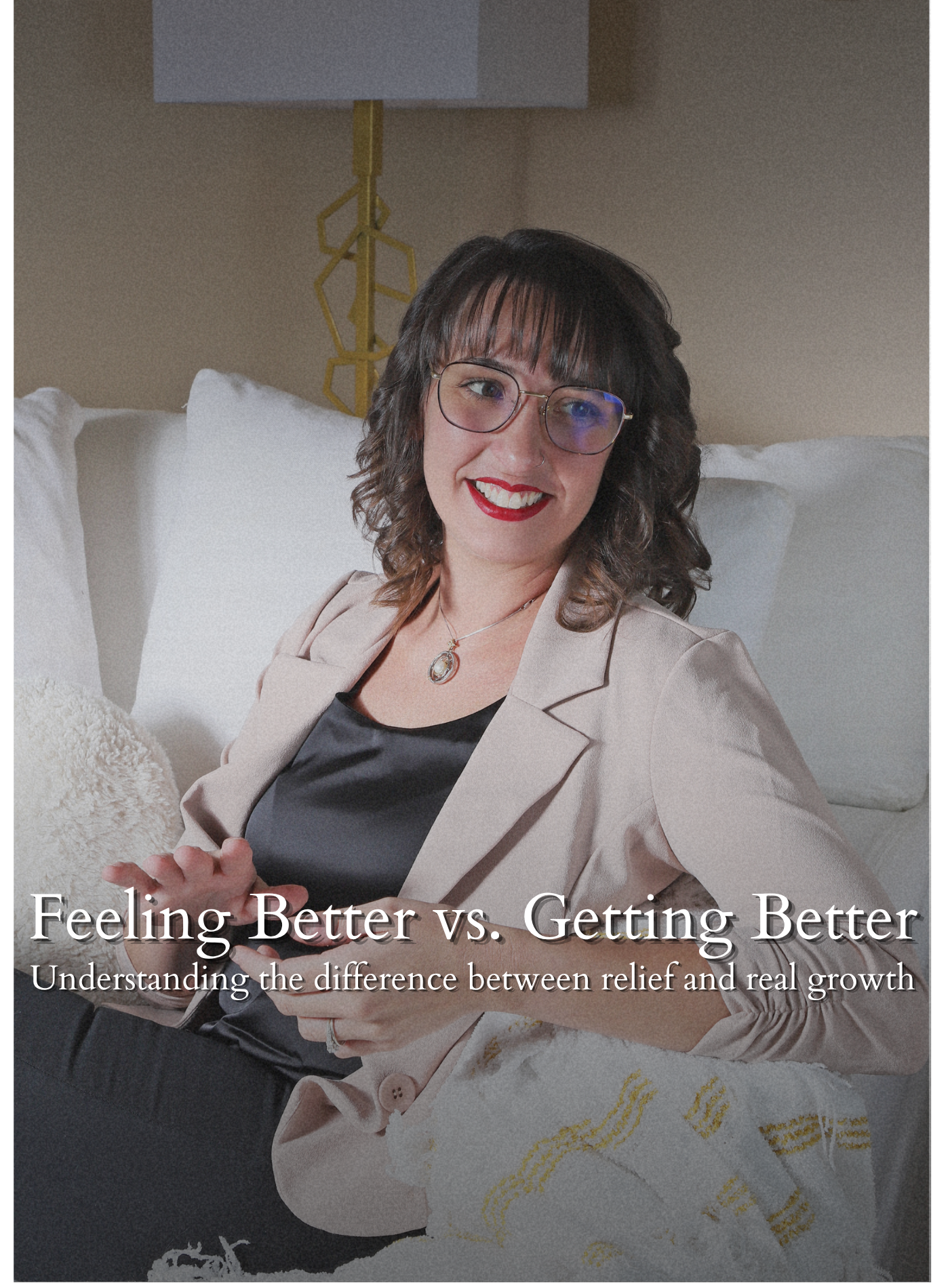
Rebecca Booth seated on a white couch in a calm therapy office, smiling thoughtfully
Most people want to feel better, especially when they are overwhelmed, anxious, stuck, or emotionally exhausted. Wanting relief is natural. When life feels heavy, it makes sense to want comfort, reassurance, and a break from distress.
But feeling better and getting better are not always the same thing.
Feeling better often means finding immediate relief. It may look like calming down after a hard day, avoiding a difficult conversation, distracting yourself from emotional pain, or reaching for what feels familiar and safe. In many moments, these responses are understandable. Sometimes they are even necessary. Relief has value.
Getting better, however, usually involves something deeper. It often requires self-reflection, honesty, and a willingness to look at patterns that may be keeping you stuck. It may mean tolerating discomfort long enough to make meaningful change rather than only seeking what helps in the moment.
That is where growth begins.
Why Growth Does Not Always Feel Good
One of the hardest parts of healing is recognizing that growth can feel uncomfortable. Setting boundaries may feel guilt-inducing before it feels empowering. Speaking honestly may feel scary before it feels freeing. Changing long-standing patterns may create anxiety before it creates confidence.
This is one reason people sometimes confuse discomfort with failure. If something feels hard, they assume it must be wrong. But discomfort is not always a sign that you are going backward. Sometimes it is a sign that you are doing something new.
Growth often requires stepping outside of familiar ways of coping. It asks you to tolerate the temporary discomfort of change in service of something more lasting.
Relief and Avoidance Are Not the Same
It is important to make another distinction here. Not everything that helps you feel better is unhealthy, and not everything uncomfortable is automatically helpful. The goal is not to glorify struggle or ignore your emotional needs. The goal is to recognize when short-term relief becomes long-term avoidance.
For example, resting when you are emotionally drained can be healthy. Avoiding every difficult situation because it creates discomfort can keep you stuck. Self-soothing can support healing. Constantly numbing, distracting, or escaping pain without addressing its source can delay it.
Healing often involves learning when you need comfort and when you need challenge.
What Getting Better Can Look Like
Getting better may look like noticing repeated patterns in relationships and choosing to respond differently. It may look like facing fears gradually instead of letting them make decisions for you. It may mean learning how to regulate emotions, communicate more clearly, tolerate uncertainty, or stop measuring your worth by performance and approval.
These changes are not always dramatic from the outside. Sometimes they are quiet and deeply internal. Sometimes getting better looks like pausing before reacting. Sometimes it looks like saying no. Sometimes it looks like grieving what you hoped would be different and choosing to move forward anyway.
Real growth is often less about becoming a different person and more about becoming more honest, more intentional, and more grounded.
The Courage to Choose Long-Term Growth
Choosing to get better often means letting go of the idea that healing should always feel comfortable. It means understanding that confidence is usually built through practice, not avoidance. It means trusting that short-term discomfort can lead to long-term strength, clarity, and peace.
This does not mean you have to force yourself through every hard thing alone. Support matters. Safety matters. The healing process should not be about pushing yourself beyond your limits. It should be about learning how to stretch in ways that are sustainable and meaningful.
Therapy can be a place where that happens. It can offer space not only to feel supported, but also to better understand what growth requires in your specific life.
Choosing Growth
If you have been focused on feeling better, that does not mean you are doing something wrong. Relief is part of healing. But there may come a point when you begin asking deeper questions. What patterns need to change? What discomfort am I avoiding? What would it look like to move beyond survival and into growth?
Getting better is not about becoming perfect. It is about becoming more aware of what is keeping you stuck and more willing to engage in the kind of change that leads to lasting healing.
Feeling better may bring temporary relief. Getting better can create transformation.
If you are ready to move beyond short-term coping and begin working toward deeper healing, therapy can help. Call (772) 212-5327 or book online to get started.